
Immersive STEAM Lab with Digverse Lab
$600 $480/per week
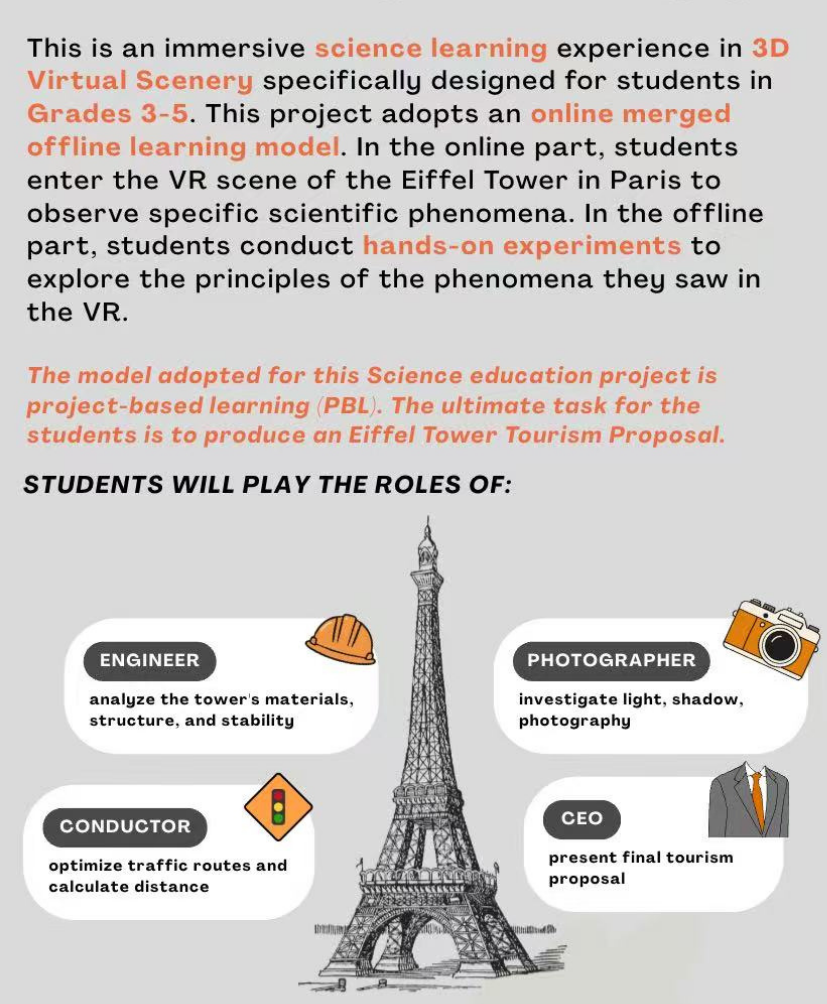
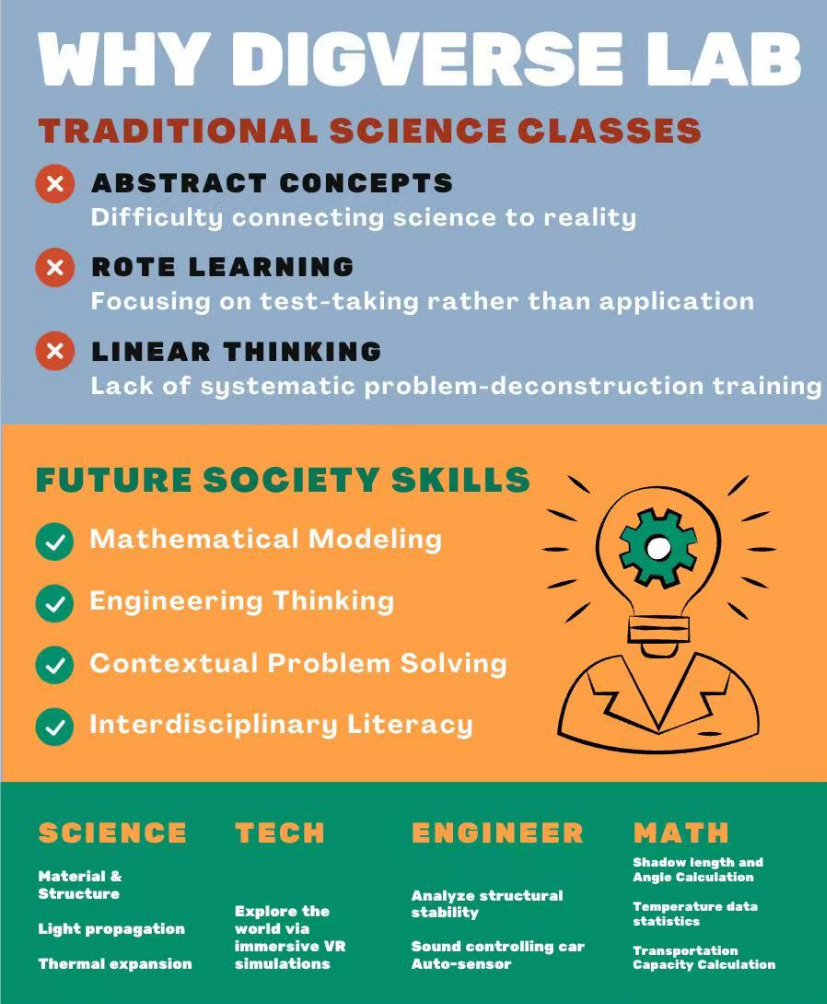
This is an immersive science learning experience in 3D Virtual Scenery specifically designed for students in Grades 3–5. This project adopts an online merged offline learning model. In the online part, students enter the Virtual Scenery of the Eiffel Tower in Paris to observe specific scientific phenomena. In the offline part, students conduct hands-on experiments to explore the principles of the phenomena they saw in the scenery.
The model adopted for this Science education project is project-based learning (PBL). The ultimate task for the students is to produce an Eiffel Tower Tourism Proposal. Students need to demonstrate the scientific rigor, structural feasibility and unique tourism value of this building. The larger task will be divided into 4 sub-tasks. Students will play the roles of engineers (studying the materials and structure of the Eiffel Tower), photographers (studying the propagation of light and changes in shadows), conductors (using mathematical modeling to solve traffic congestion), and CEOs (reporting the plan to the Paris Tourism Bureau) at different stages of the project.
Daily Camp Schedule (Mon-Fri):
9 AM - 12 PM - AM Class
12 PM - 1 PM - Lunch Break
1 PM - 4 PM - PM Class
4 PM - 5 PM - Optional Aftercare Add-On (purchase separately)
Limited Free Trial Class Schedule
— Try Out Our Immersive STEAM Lab!
June 19: 5:00–6:00 PM at Bellevue
1910 132nd Ave NE, Ste 7, Bellevue, WA 98005
Frequently Asked Questions
-
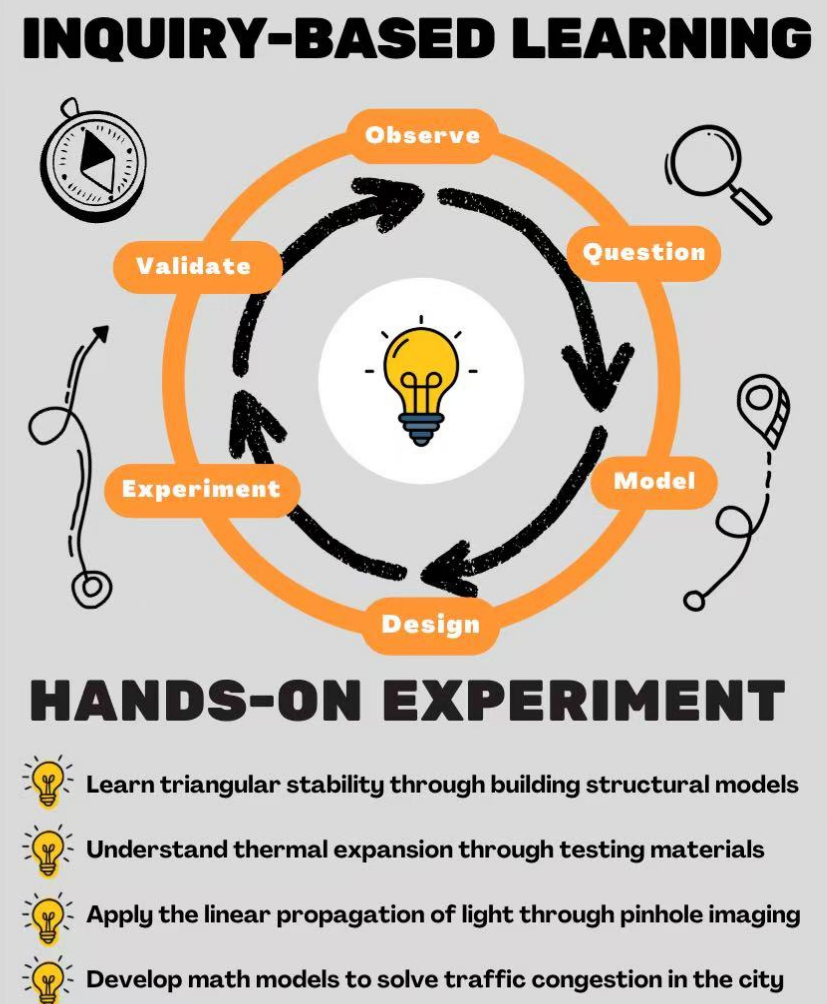
Core Method: Task-Based Learning & Breaking Problems Down
Students start with a clear goal (for example, creating a travel plan for the Eiffel Tower). They then break this big task into smaller, manageable parts—like researching history, understanding the structure, planning transportation, and designing how to take photos.Interdisciplinary Learning
Each task connects different subjects. For example, taking a good photo is not just about art—it also involves science. Students explore light, shadows, and timing through simple experiments like pinhole imaging.From Learning to Doing
Students don’t just memorize knowledge—they use it. What they learn in math and science helps them solve real problems, which makes learning more interesting and rewarding.The course is student-centered, focusing on exploration and creative design. Teachers act as facilitators—guiding learning, supporting teamwork, and providing help when needed.
-
20% Screen Time (Screen as a Tool):
Students use computers to explore 3D virtual scenes (like the Eiffel Tower). This helps them see things that are hard to observe in real life. For example, instead of waiting months to see how sunlight changes, they can quickly compare shadows in different seasons and find the best time for photos.60% Hands-on & Engineering:
This is the main part of the class. Students build models, do simple engineering projects, and design logic-based games. They use hands-on activities to test and understand the ideas they saw in the virtual world.20% Mathematical Modeling & Thinking:
Students turn what they observe into numbers, patterns, and simple models. This helps them build strong thinking and problem-solving skills. -
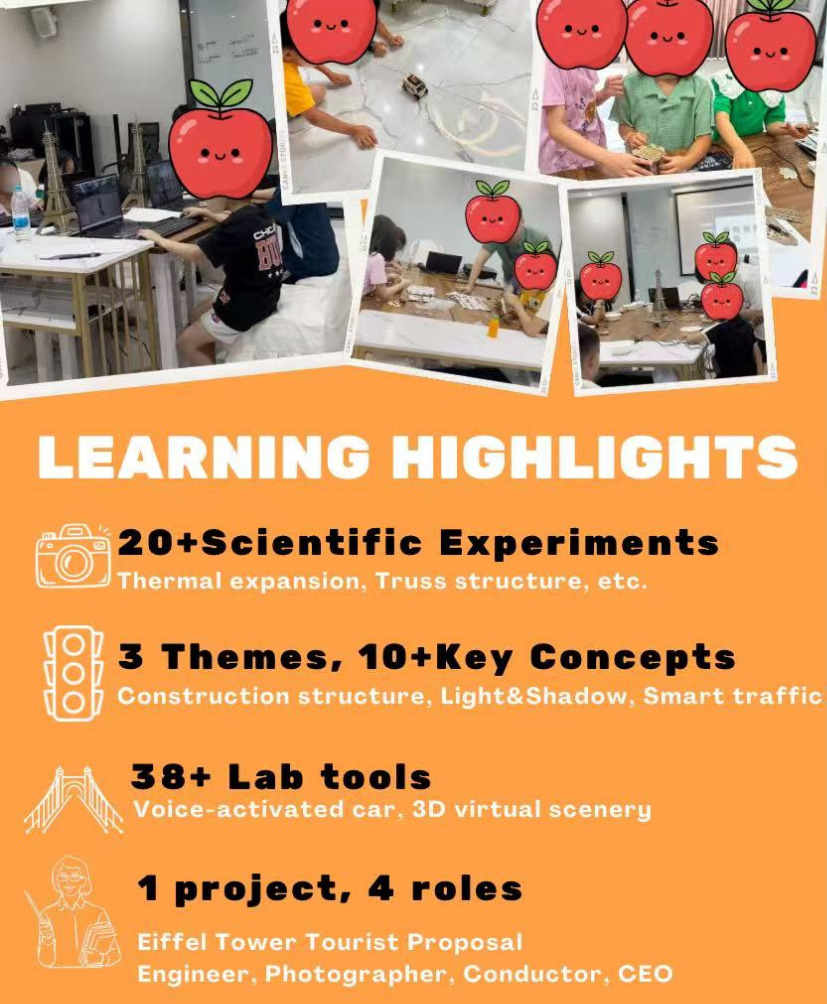
Depending on different experimental needs, we use more than 38 types of teaching tools. For example, pinhole imaging kits, truss structure building sets, shadow theater tools, and hopscotch-style game materials, among others.
-
Our course strongly emphasizes team collaboration. Three students share one computer, and each student has a clear role. For example: the Driver operates the computer and completes tasks in the 3D virtual environment; the Data Officer records experimental data and key information; and the Strategist handles research, calculations, and monitors overall progress of the project.
-
We want students in Grades 3–5 to understand that in scientific exploration, making mistakes is not only allowed but also an essential part of finding the right answer. In this way, we help them build resilience and learn to face challenges with confidence.
-
Yes. We not only provide dedicated lessons on poster design and presentation planning, but also integrate this “externalizing thinking” practice into every project. This ensures that students are not only able to complete the task, but also clearly explain and present their ideas.